



Skip to content

What is Agarwood?

The fragrant resin treasured for thousands of years — explained.

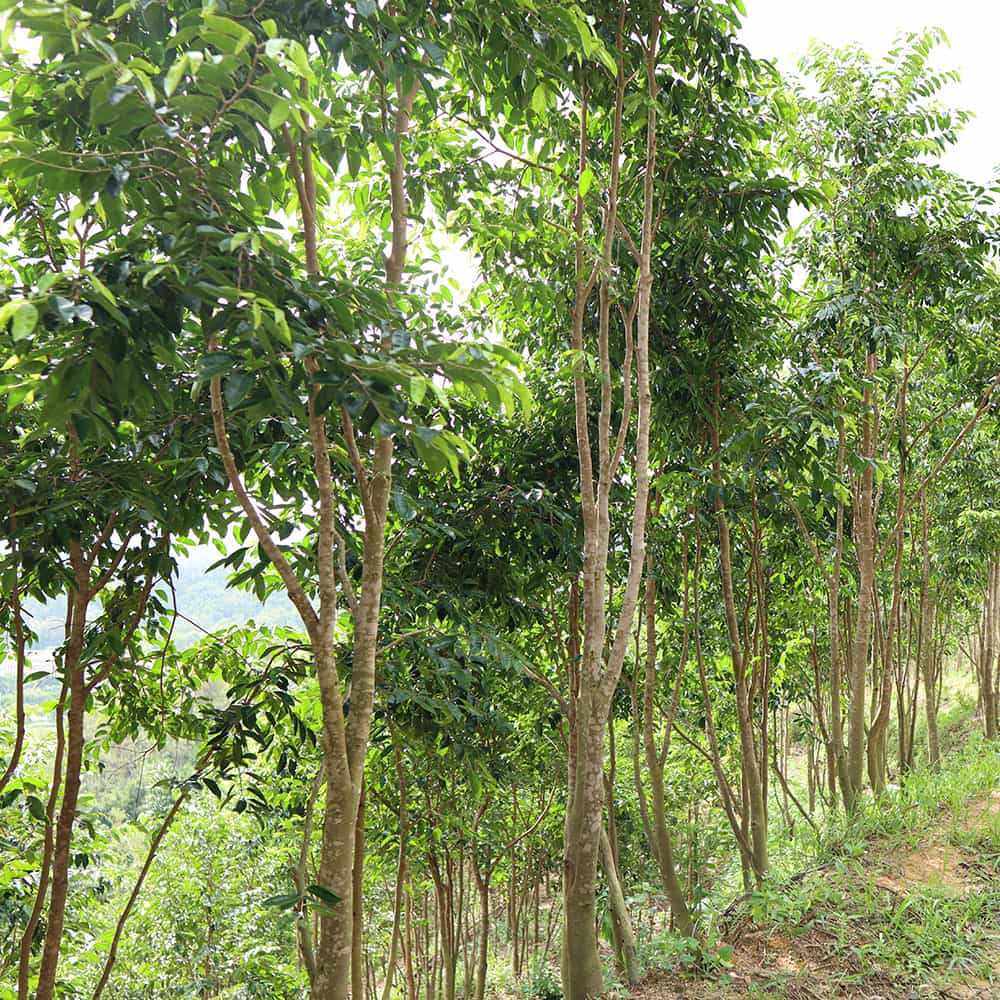
Agarwood — known as oud (عود) in Arabic, chénxiāng (沉香) in Chinese, jinkō (沈香) in Japanese — is the dark, fragrant resin that forms inside Aquilaria trees in response to wounding or fungal infection. Healthy Aquilaria wood is pale and odourless; the precious resin appears only after the tree mounts a defensive response. Today most legal agarwood reaches the market through plantation cultivation under CITES Appendix II rules.
A Tree's Defense, Humanity's Treasure

Agarwood — also known as oud, aloeswood, or 沉香 — is the dark, fragrant resin produced by Aquilaria trees in response to injury or fungal infection.

Healthy Aquilaria wood is pale and odorless. It is only when the tree is wounded that it begins to secrete the precious resin that gives agarwood its unmistakable scent.

This rare combination of biology and chance has made agarwood one of the most valuable raw materials in the world by weight.

A Tree's Defense, Humanity's Treasure

How Agarwood Forms — 4 Stages

1. Wounding

The tree is naturally or artificially injured.

2. Infection

Fungi enter the wound and trigger a defense response.

3. Resin Secretion

The tree produces aromatic resin to protect itself.

4. Maturation

Years of accumulation transform the wood into agarwood.

Aquilaria Species We Cultivate

Aquilaria sinensis

Our primary species — native to Guangdong, prized in East Asia.

Aquilaria crassna

Indochinese species, classic Cambodi profile.

Aquilaria malaccensis

Indian-Malaccan species, the historical reference.

Grafted Kynam Lines

Our exclusive university-partnered varieties.

Have a question or quote request?

How agarwood forms

  1. Wounding — the tree is naturally injured or artificially induced.
  2. Infection — fungi enter the wound and trigger defence response.
  3. Resin secretion — the tree produces aromatic resin to protect itself.
  4. Maturation — years of accumulation transform pale wood into agarwood.

Aquilaria species OudLink cultivates

Our primary cultivar is Aquilaria sinensis, the species native to southern China and well adapted to the red-earth hill terroir of Maoming and Hainan. Through our research partnership with South China Agricultural University, we also develop grafted Kynam stock — a category of agarwood with exceptional resin saturation and a distinctive cool-sweet scent that traditionally appeared only through wild harvest.

Why agarwood is among the world's most valuable raw materials

The combination of biological rarity (most Aquilaria trees never produce significant resin), long maturation cycle (years to decades for premium grades), restricted trade (CITES Appendix II), and sustained cultural demand across the Arab world, China, and Japan keeps premium agarwood priced by the gram rather than the kilogram. Top-tier 奇楠 can exceed gold prices weight-for-weight at auction.

Frequently Asked Questions

What's the difference between oud and agarwood?
They're the same material. "Oud" (عود) is the Arabic word, "agarwood" the English term, "chénxiāng" (沉香) the Chinese, "jinkō" the Japanese. The substance is identical — the regional name differs.
Why is agarwood expensive?
Most Aquilaria trees never produce meaningful resin even after decades. Yield is uncertain, harvest is destructive, CITES restricts trade, and demand from the Arab world and China is sustained. Premium chips are sold by the gram.
Is wild agarwood still available?
Wild agarwood is heavily restricted under CITES and effectively unavailable in commercial volumes from legitimate sources. Plantation-cultivated Aquilaria — like ours — is the legal commercial supply.
Why does the same wood smell different to different people?
Oud is one of the most chemically complex natural fragrances — hundreds of sesquiterpenes, chromones, and other compounds. Individual receptor sensitivity varies, and agarwood profile shifts dramatically with origin, aging, and burn temperature.
Is agarwood the same as sandalwood?
No. Sandalwood is heartwood from Santalum trees, primarily Indian and Australian. Agarwood is resin-impregnated wood from Aquilaria. Different botany, different scent profile, different price tier.